

7 STRENGTHS OF A SMALL TEAM

In planning and design, the size of a team can determine how work is completed. It can influence how ideas are shared, how quickly teams respond, how consistently a vision carries forward, and ultimately, how connected everyone remains to the project along the way.
At Strata, being a small landscape architecture and land planning firm creates opportunities to work differently. Our scale allows for direct collaboration, continuity, and shared responsibility, with clients and project partners working closely with the people actively engaged on their projects.
Being a small team does not mean thinking small, rather it creates an opportunity to think broadly while remaining deeply engaged. Here are 7 strengths we see in that approach.
1) FEWER LAYERS. MORE CONNECTION.
Strong projects depend on strong communication.
Landscape architecture and land planning cannot happen in isolation. Architects, engineers, developers, municipalities, contractors, stakeholders, and many others contribute to a project over its lifespan. With so many perspectives involved, clear communication and thoughtful coordination are essential.
A smaller team can help simplify that process.
At Strata, clients and collaborators have direct access to the people actively working on the project. Questions can become conversations. Ideas are explored together. Decisions are discussed with those who understand not only the immediate issue, but also the larger framework behind the plan.
This proximity creates an important connection. It allows us to listen closely, understand priorities, and remain aligned with the people and goals guiding each endeavor.
2) BUILT TO MOVE WITH THE PROJECT.
Projects evolve.
New site information emerges. The jurisdiction provides feedback. The client sees an opportunity worth exploring. Consultants identify constraints. What made sense during an early planning exercise may now need to adapt as the project becomes more defined.
Good design requires the ability to respond without losing sight of the larger vision.
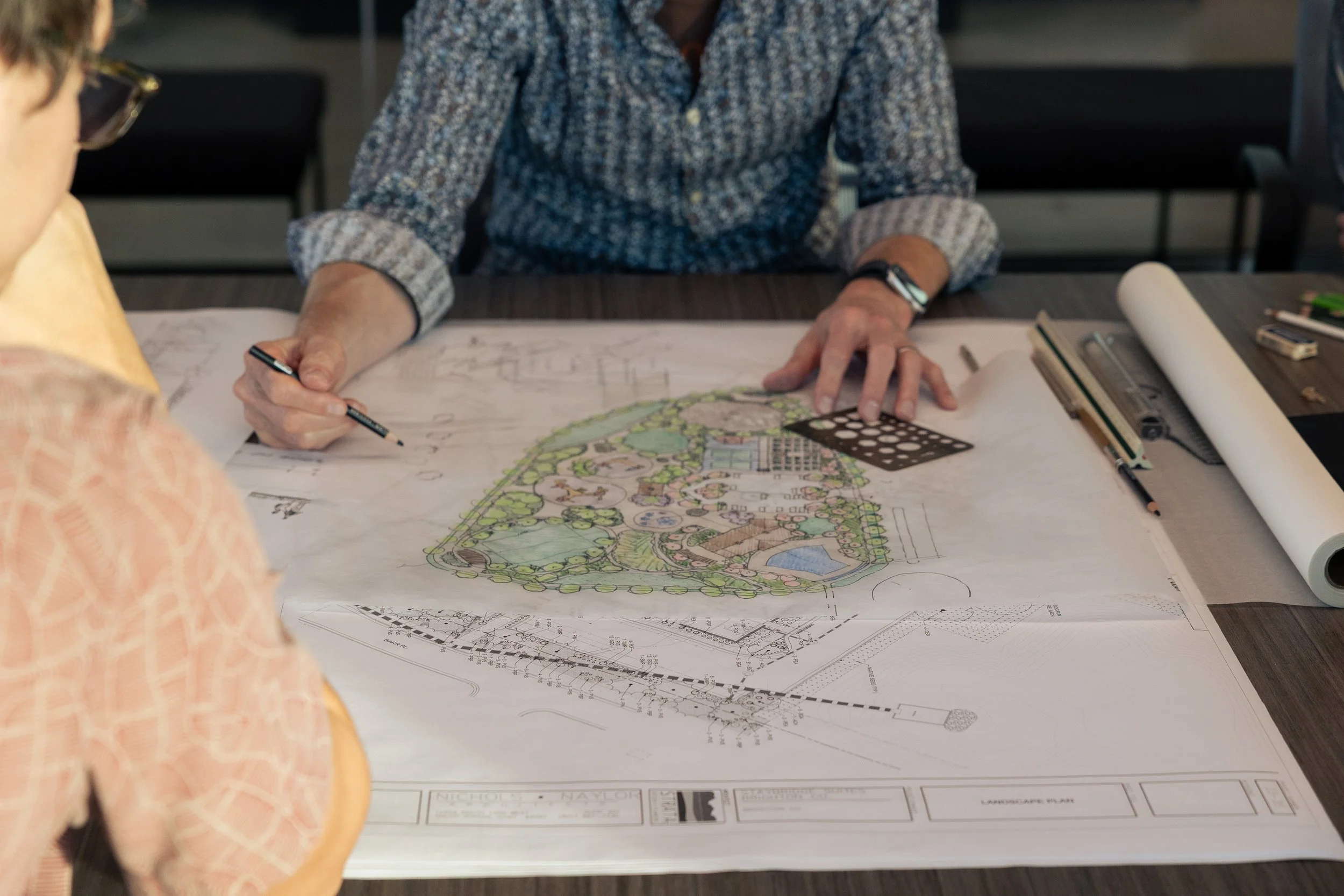
With a focused team, communication happens quickly and ideas move fluidly between planning and landscape architecture. Instead of treating change as a disruption, we can work through it collaboratively, understanding what it means for the project as a whole and identifying a considerate path forward.
Being nimble is not just about moving fast. It is about remaining responsive while continuing to make thoughtful decisions.
3) DIFFERENT PERSPECTIVES. CONNECTED THINKING.
A small team does not mean a singular point of view.
At Strata, land planning and landscape architecture bring different perspectives to the same questions. Working closely allows those perspectives to intersect throughout the process, creating opportunities to challenge assumptions, explore possibilities, and consider decisions from more than one angle.
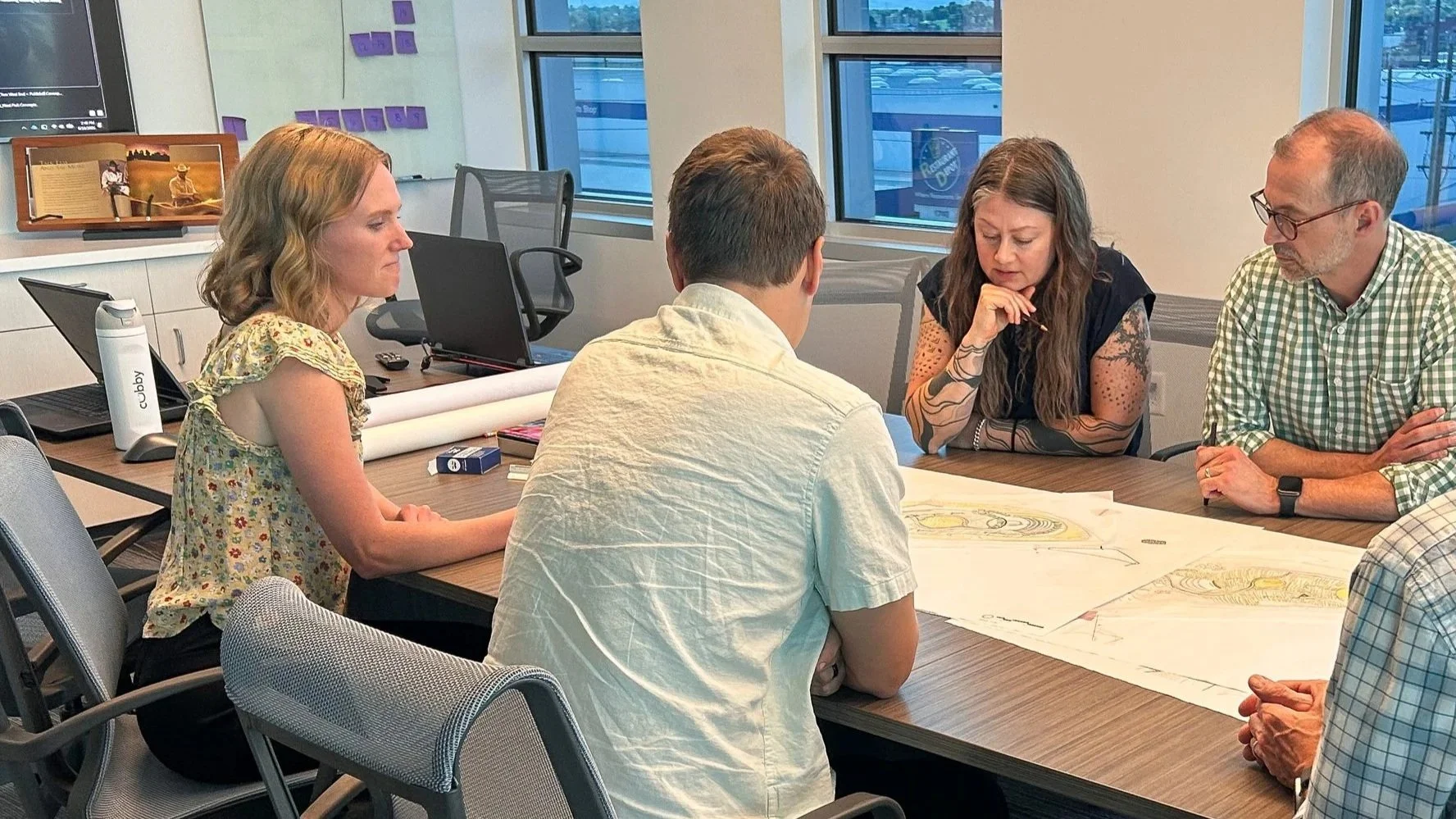
That exchange strengthens the work. Ideas are not developed in isolation or passed from one discipline to the next. They evolve through conversation, informed by an understanding of both the larger framework and the details that bring it to life.
For a small team, collaboration becomes more than coordination. It creates space for different perspectives to strengthen the same idea.
4) THE VISION STAYS WITH THE TEAM.
Some of the most important decisions on a project happen early.
Open space framework, pedestrian and vehicle circulation, or placemaking ideas established during planning can influence countless decisions that follow. Maintaining continuity as those ideas move from concept toward implementation helps preserve the intent behind them.
A smaller project team allows for that knowledge to stay connected.
The decision makers involved in establishing the vision remain engaged as the project develops, bringing an understanding of where an idea started, why a decision was made, and what matters most as details evolve.
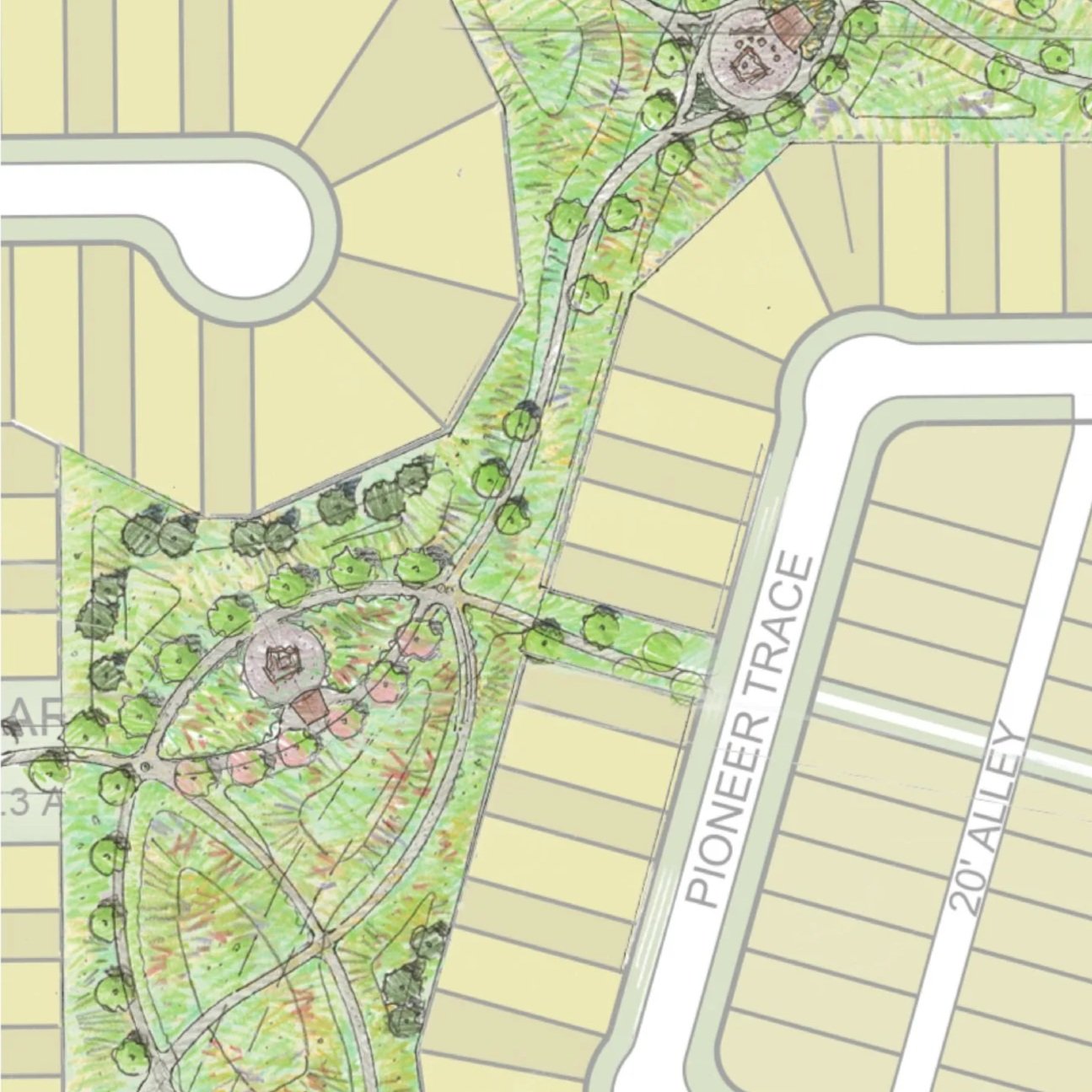
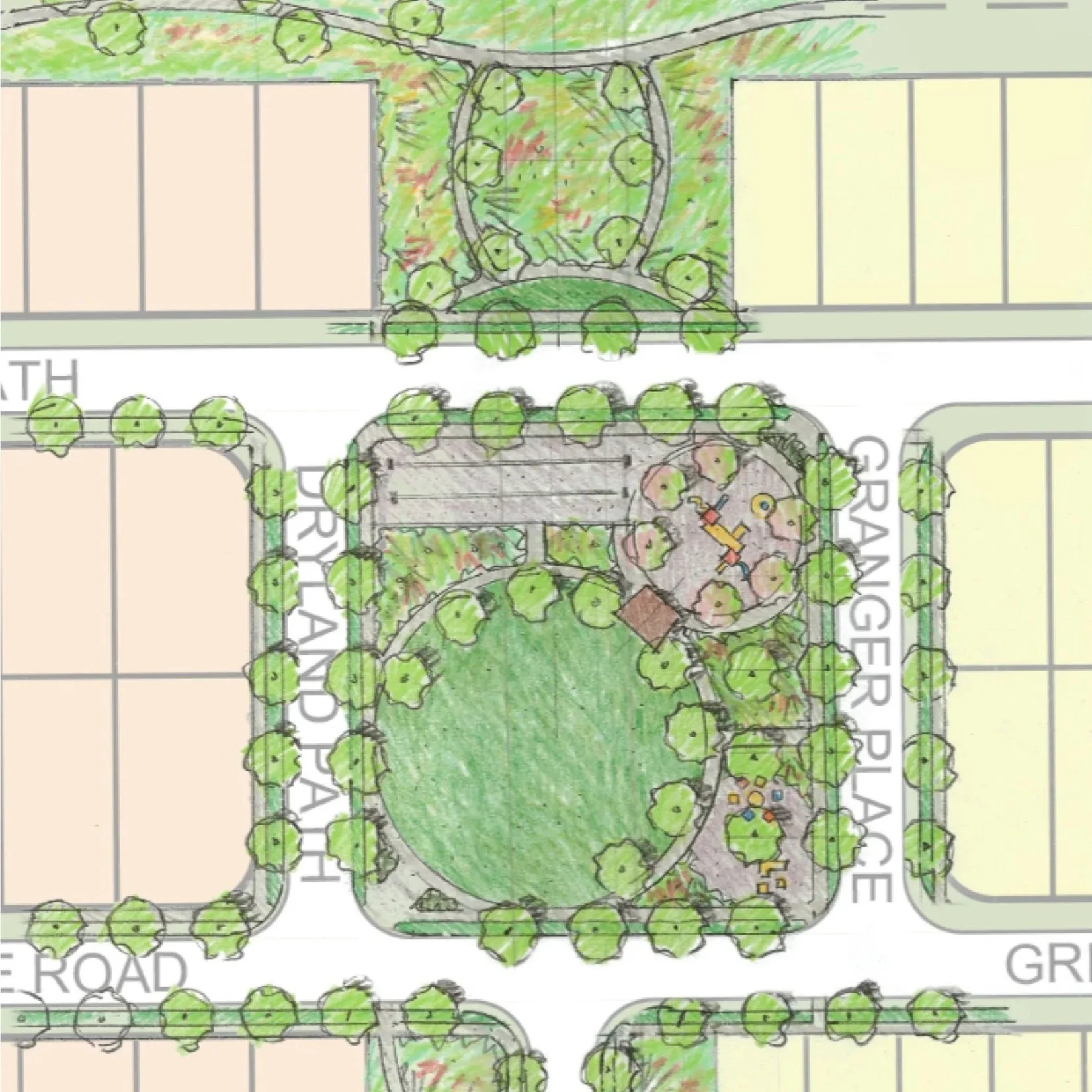
At Strata, the relationship between land planning and landscape architecture strengthens that continuity. Planning establishes the broader framework of a place, while landscape architecture brings in layers of experience, character, and detail. When those disciplines inform one another throughout the process, decisions can be considered at multiple scales rather than as isolated moments.
The result is more than consistency. It is a connected process, carrying big-picture thinking through to the details that influence how a place ultimately feels and functions.
5) THE DEPTH BEHIND THE WORK.
Firm size and experience are not the same thing.
A smaller practice can bring together professionals whose perspectives have been formed by decades of different projects, places, challenges, and lessons learned. That experience is most valuable when it remains accessible to the work.
At Strata, our team brings experience across master-planned communities, public realms, parks and open spaces, mixed-use environments, residences, schools, resorts, and other complex landscapes. Those experiences help us recognize opportunities, anticipate constraints, and ask better questions from the outset.
In a small-team environment, that perspective is brought directly into project conversations.
6) EVERY PROJECT REQUIRES ITS OWN RESPONSE.
There is no universal formula for creating a meaningful place.
Each site brings its own conditions. Each client has different goals. Each community has its own character. Regulations, budgets, environmental considerations, schedules, and stakeholder needs create other layers of complexity.
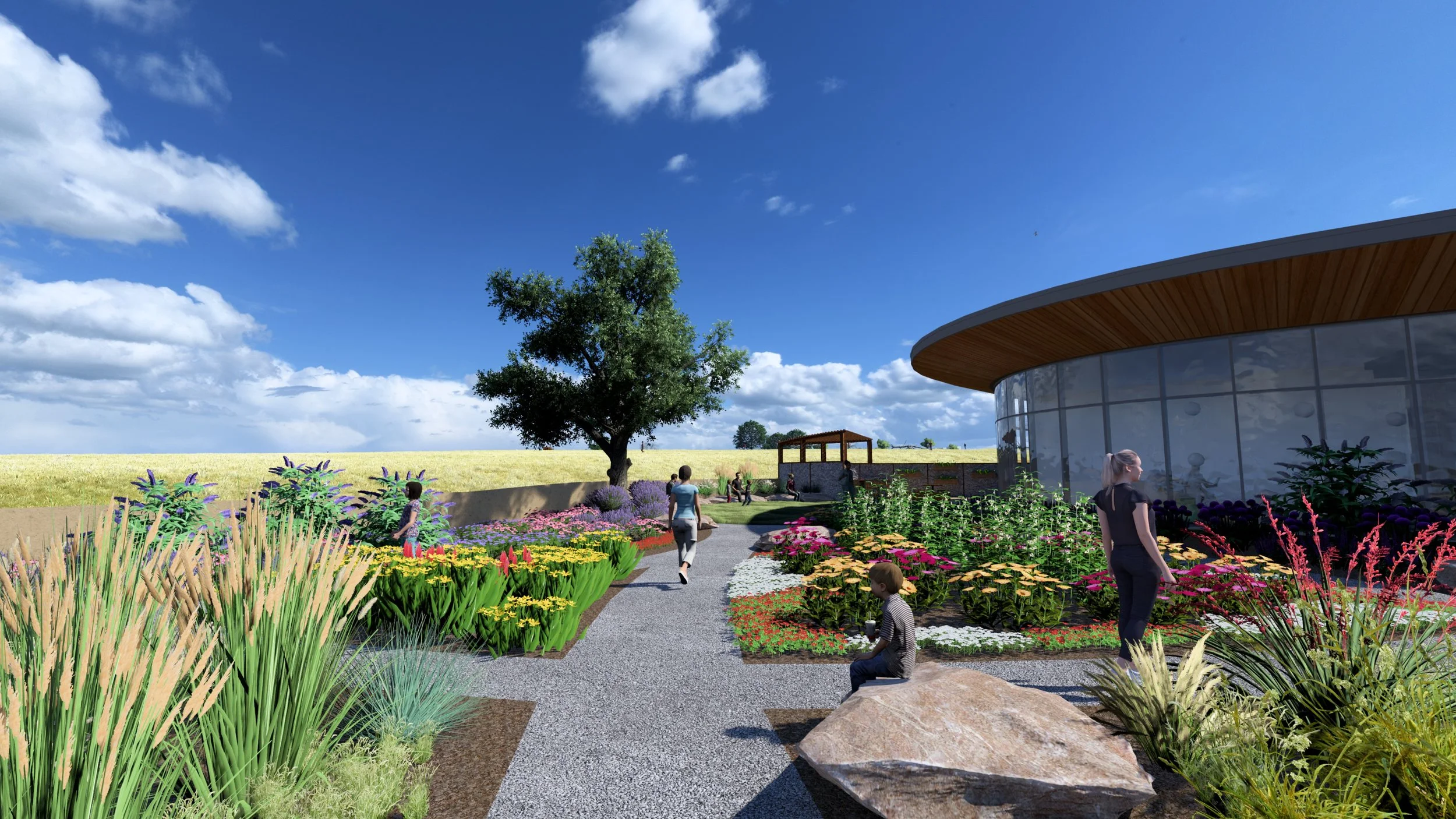
A small-team environment supports a more personal and attentive approach to those differences.
It creates space to listen before responding and to understand the conditions of a project before determining the next steps. Rather than approaching a site with a predetermined answer, we can focus on developing solutions that balance vision with feasibility and creativity with context.
The strongest ideas are not applied to a place; they emerge from understanding it.
7) SMALL TEAM. SHARED RESPONSIBILITY.
Working closely also creates accountability.
When a team is lean, everyone has a meaningful role in moving the work forward. There is a shared understanding of the project, its priorities, and the responsibility each person carries in delivering a successful outcome.
For our clients, that means working with people who are personally invested in the process. For our team, it means approaching projects with curiosity, ownership, and an openness to one another’s perspectives.
That collaboration is not an added step in the process. It is critical to how we work.
WHAT A SMALL TEAM MAKES POSSIBLE.
There is not a perfect size for a design firm or a project team. Different projects require different expertise, resources, and approaches. But there are meaningful advantages that come from working with a smaller team.
Our team may be small, but our perspective is not.

Have a project that could benefit from a connected approach? Let’s explore what we can create together.